Phonological Awareness for Pre-K/ Reading2Success
Phonological awareness for Pre-k, oral language, is the foundation of learning to read and write. It is also crucial to kids' future reading achievement and school success. Toddlers begin early to imitate what they hear, mama, dada and og for dog. And parents repeat the words back to them slowly and accurately.
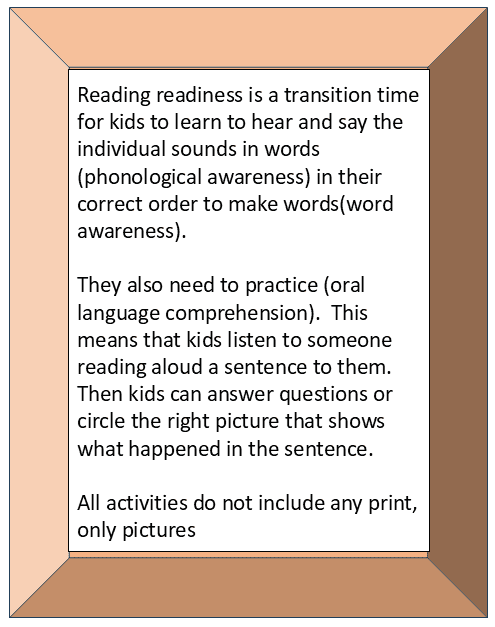
When kids are of age to enter Pre-K and Kindergarten, they are ready to engage in fun phonological activities. These activities do not involve print, only pictures. So, teachers need to plan language learning experiences that help children go beyond what they already know and can do.
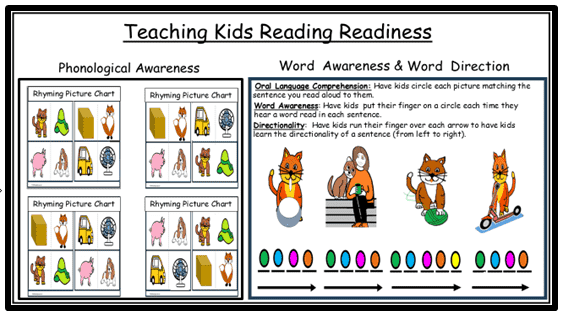
All kids love rhyming activities. Whether they are singing, listening to or sorting picture rhymes, it is important work for them. It helps develop early literacy skills and oral language abilities. But most important it helps kids bridge the gap to learning word families. Word families are groups of words that have the same ending sounds, so they rhyme.
An example of a group of word families is bat, cat, hat, mat, sat, all ending in the sound at. As the kids learn more groups, they can sort the pictures according to ending sounds. Other activities are matching pictures with beginning and ending sounds and sound boxes. click here for more examples http://reading2success.com/phonological -awareness
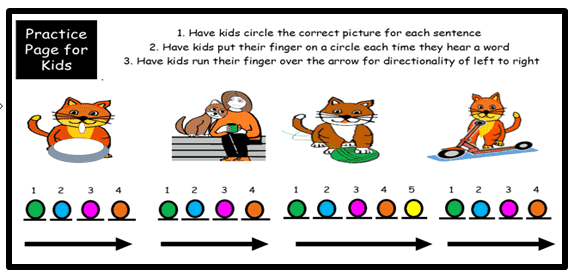
Oral language comprehension is also practiced in phonological awareness for pre-k. This is when kids listen to someone read aloud a sentence to them. Then kids can answer questions or talk about what happened in the sentence.
Why Phonological Awareness Matters
Learning to hear sounds before reading letters helps kids prevent future struggles in kindergarten and later. The great news is at this time kids are curious and want to learn.